


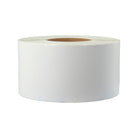


100×100mm Direct Thermal Labels – 1000 Labels/Roll, 76mm Core
Pickup currently unavailable at Blumax Group Pty Ltd
Direct thermal Perforated Label 100mm x 100mm - 1000 Labels Per Roll, 76mm Core.
Professional 100×100mm direct thermal labels supplied in large industrial rolls of 1000 labels with a 76mm core.
Ideal for barcode printing, warehouse inventory, carton identification, logistics, product information and stock control. Direct thermal technology requires no ribbon, making these labels simple and economical for high-volume business printing.
Key Features
- Label size: 100×100mm
- 1000 labels per roll
- 76mm core
- Direct thermal material
- No ribbon required
- Large industrial roll format
- Suitable for barcode and QR code printing
- Ideal for warehouse, carton and inventory identification
- Suitable for compatible 4-inch industrial direct thermal printers
- Australian stock
- Primary Applications: Barcode, warehouse, carton, inventory, product and logistics labels
- Printer Type: Compatible direct thermal industrial label printer
What Are 100×100mm Direct Thermal Labels Used For?
The square 100×100mm format provides considerably more printing space than 100×50mm or 100×75mm labels while remaining more compact than a full 100×150mm shipping label.
Common applications include:
- Warehouse barcode labels
- Inventory labels
- Carton identification
- Product identification
- Logistics labels
- Dispatch labels
- Stock control
- SKU labels
- QR code labels
- Batch and lot labels
- Manufacturing identification
- Receiving labels
- Internal tracking labels
Why Choose 100×100mm?
The 100×100mm size provides plenty of room for both machine-readable and human-readable information.
A single label can contain:
- Large barcode
- QR code
- Product name
- SKU
- Batch number
- Quantity
- Date
- Warehouse location
- Handling instructions
- Internal reference information
It is a useful choice when 100×75mm does not provide enough space, but a 100×150mm label is larger than necessary.
Direct Thermal Printing – No Ribbon Required
Direct thermal labels contain a heat-sensitive coating.
The printer applies heat directly to the label surface to create the text, barcode or image, so no thermal transfer ribbon is required.
Direct thermal is well suited to applications where labels are needed for short to medium periods.
Barcode & Warehouse Applications
The 100mm square format is particularly suitable for warehouse operations where labels need to contain larger barcodes or multiple pieces of information.
Use them for:
- Stock receiving
- Inventory management
- Picking and packing
- Carton identification
- Product movement
- Warehouse tracking
- Distribution
- Manufacturing
- Internal logistics
Printer Compatibility
These rolls use a 76mm / 3-inch core and are primarily designed for compatible industrial or commercial thermal label printers.
Before ordering, check:
- Maximum supported media width
- 76mm core compatibility
- Maximum roll diameter
- Direct thermal printing capability
- Media sensor requirements
Important: Large 76mm-core rolls may not fit compact desktop thermal printers.
FAQs
Q: Do 100×100mm direct thermal labels require a ribbon?
No. Direct thermal labels print directly using heat and do not require a ribbon.
Q: What are 100×100mm labels commonly used for?
They are ideal for warehouse barcodes, cartons, inventory, product identification, logistics and stock control.
Q: Are they suitable for barcode printing?
Yes. The large square format provides excellent space for barcodes, QR codes and additional product or inventory information.
Q: Should I choose 100×75mm or 100×100mm?
Choose 100×75mm for more compact applications. Choose 100×100mm when you need additional space for larger barcodes, descriptions or multiple data fields.
Q: Will a 76mm-core roll fit my printer?
Please check your printer specifications. These large industrial rolls are intended for printers that accept 76mm / 3-inch cores.
Q: Are these the same as thermal transfer labels?
No. Direct thermal labels print without a ribbon. Thermal transfer labels require a ribbon and are normally chosen when greater long-term print durability is needed.